Yeti Towing and Service Accident Recovery You Can Count On in a Crisis

An accident can turn an ordinary drive into a stressful, confusing moment in seconds. There may be broken glass, a vehicle that will not move, traffic passing nearby, weather making things worse, and people trying to figure out what to do next.
In that kind of crisis, the right towing and recovery team matters. You need more than a truck. You need steady help, safe handling, and clear communication from someone who understands that the vehicle is only one part of the situation.
Yeti Towing and Service provides accident recovery support for drivers who need help after a crash, slide-off, ditch incident, or immobilized vehicle situation. Their work can include towing from the site of an accident, winching a vehicle out of a difficult spot, and using a flatbed truck when that is the safest and easiest option.
Just as important, the owners bring calm and empathetic customer service to a moment when people often feel shaken. That kind of approach helps turn a hard experience into a manageable one.

Accident recovery is more than moving a damaged vehicle
After an accident, it is easy to think of towing as the final step. The car is damaged, so it needs to leave. Simple enough.
Real accident recovery is more involved.
The vehicle may be blocking traffic. It may be too damaged to roll normally. It may have slid into a ditch, stopped at an awkward angle, or become stuck in mud, snow, gravel, or soft ground. In some cases, the wheels are locked, the steering is damaged, or the vehicle cannot shift into neutral.
A recovery operator has to look at the scene and make careful choices:
Where should the tow truck be positioned?
Is the vehicle stable?
Can it be winched without causing more damage?
Does the vehicle need a flatbed?
How can the recovery be done without creating more risk for other drivers?
This is where experience and a calm process make a difference. Accident recovery is not only about strength. It is about judgment.
Yeti Towing and Service Accident Recovery You Can Count On in a Crisis means getting help that focuses on safety, control, and care from the first interaction.
Towing from the accident site should feel organized, not chaotic
The scene of a crash can feel overwhelming. Police, fire, EMS, insurance questions, family calls, and traffic concerns may all happen at once. A towing company that adds confusion makes the moment harder.
Yeti Towing and Service helps by bringing a steady presence to the scene. The goal is to remove the vehicle safely while keeping the process as clear as possible.
Depending on the situation, accident-site towing may include:
Removing a vehicle from the road or shoulder
Loading a damaged or disabled vehicle
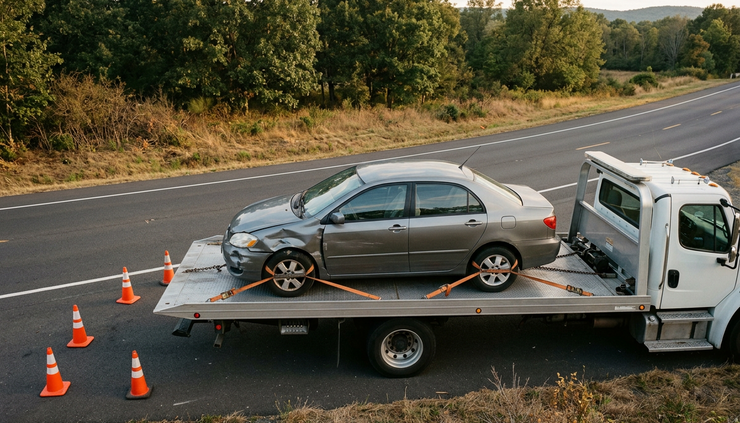
Accident recovery with flatbed truck and winch
Transporting it to a repair shop, home, storage location, or other approved destination
Coordinating with the driver or appropriate people on scene
Handling the vehicle with care to reduce the chance of added damage
The best towing experiences after an accident are calm and direct. People need simple answers. They need to know what is happening next. They need to feel that someone has the vehicle situation under control.
That is especially true when the driver is upset, injured, or dealing with family members in the vehicle. A good recovery team knows when to explain, when to listen, and when to simply get the job done.
Winching helps when a vehicle is stuck, off-road, or immobilized
Not every accident leaves a vehicle neatly on the pavement. A driver may slide into a ditch during bad weather. A vehicle may be pushed off the road after a collision. A car may end up in grass, mud, snow, or uneven ground where it cannot drive out on its own.
That is where winching becomes important.
Winching uses cable and controlled pulling power to move a vehicle from a stuck or unsafe position. It is often the right solution when a vehicle is:
In a ditch
Stuck in mud, snow, sand, or soft ground
Hung up on uneven terrain
Too damaged to move under its own power
Immobilized after a crash
Positioned where it cannot be safely driven or loaded right away
Winching should not be rushed. The operator needs to choose the right attachment points, angle, and pulling method. Pulling the wrong way can cause unnecessary damage or make the vehicle harder to recover.
A careful recovery may involve short, controlled pulls rather than one forceful attempt. The goal is to move the vehicle safely, not simply move it quickly.

A flatbed truck can make accident towing easier on the vehicle
A flatbed truck is one of the most useful tools for accident recovery. Instead of towing a vehicle with some wheels on the ground, a flatbed carries the entire vehicle on the truck bed.
That can be a major advantage after a crash.
When a vehicle has body damage, suspension damage, steering problems, leaking fluids, or locked wheels, dragging or wheel-lift towing may not be the best fit. A flatbed can reduce strain because the vehicle is secured on a level platform for transport.
A flatbed may be helpful when:
The vehicle cannot roll safely
A wheel is damaged or misaligned
The vehicle sits too low after impact
The drivetrain may be affected
The vehicle needs to be moved with extra care
The driver wants a gentler transport option
Yeti Towing and Service has a flatbed truck that can provide ease in these situations. That ease is practical and emotional. Practically, the vehicle can often be loaded and transported with less stress on damaged parts. Emotionally, it gives the driver reassurance that the car is being handled carefully.
A flatbed does not erase the accident, but it can make the next step feel more controlled.
Calm customer service matters after a crash
A person calling for accident recovery may be angry, scared, confused, or embarrassed. They may be worried about injuries, repair costs, insurance, missed work, or how they will get home. Even a minor crash can leave someone rattled.
That is why the tone of the towing company matters.
The owners of Yeti Towing and Service are known for calm and empathetic customer service. That matters because crisis response is partly technical and partly human.
A calm operator can help by:
Speaking clearly
Giving simple next steps
Listening without rushing the caller
Asking the right questions
Explaining what can happen on scene
Treating the driver with respect
Empathy does not mean slowing the process down. It means recognizing that the person on the phone is dealing with more than a disabled vehicle.
Sometimes the most helpful thing a recovery professional can say is clear and simple: stay safe, wait in a secure place if possible, and we will help with the vehicle.
That steady guidance can lower stress in a moment that already has enough of it.

What to do while waiting for accident recovery
Every accident is different, and safety should come first. If there are injuries, smoke, fire, leaking fuel, or immediate danger, contact emergency services right away.
Once urgent safety needs are addressed, a few practical steps can help the towing and recovery process go more smoothly.
Move to a safer place if you can
If the vehicle is in traffic and it is safe to move it, pull onto the shoulder or another safe area. If it cannot move, turn on hazard lights if possible.
Do not stand in the roadway to inspect damage. Passing traffic can be unpredictable, especially at night or in bad weather.
Check on people before checking on the vehicle
The vehicle can wait. People come first.
Check yourself and passengers for injuries. If anyone may be hurt, call for medical help. Even if the crash seems minor, shock can make it hard to judge how you feel right away.
Gather clear information
When calling for towing or recovery, helpful details include:
Your location or nearest landmark
The type of vehicle
Whether the vehicle is on the road, shoulder, ditch, or another area
Whether it can roll, steer, or shift
Any visible damage to wheels or suspension
Whether police or emergency crews are on scene
Where the vehicle needs to go
You do not need to diagnose the problem. Just describe what you see. A good towing team will ask follow-up questions.
Take photos if it is safe
Photos can help with insurance and documentation. Take pictures of the vehicle, the scene, and visible damage only if doing so does not put you near traffic or danger.
Safety is more important than getting the perfect photo.
Stay calm and wait for instructions
A damaged vehicle can become more damaged if someone tries to force it to move. If a wheel is bent, the steering is broken, or the vehicle is stuck in a ditch, trying to drive it out may make recovery harder.
Waiting for proper towing or winching can protect both the vehicle and the people nearby.
Why professional recovery is better than trying to pull a vehicle out yourself
When a vehicle is stuck or disabled, it can be tempting for someone with a pickup truck, rope, or chain to help. The offer may come from a friend, neighbor, or passing driver. While the intention is good, accident recovery can become dangerous fast without the right equipment.
A vehicle in a ditch may shift suddenly. A tow strap may snap. A pulling angle may damage the frame, bumper, suspension, or undercarriage. A stuck vehicle can also slide in an unexpected direction once it breaks free.
Professional recovery brings the right tools and a safer plan.
That may include:
A winch designed for vehicle recovery
Proper hooks, straps, or attachment methods
A flatbed truck for damaged vehicles
Knowledge of safe pulling angles
Experience working near traffic
Controlled loading and securing techniques
Accident recovery is one of those jobs where the safe method may not look dramatic. It may be slow, careful, and measured. That is exactly the point.
The goal is not to prove a vehicle can be pulled out. The goal is to recover it safely and get it where it needs to go.
The right recovery team can make the next step easier
An accident already takes control away from the driver. The towing experience should help give some of that control back.
Yeti Towing and Service supports accident recovery with practical equipment and a steady approach. Towing from the accident site helps clear the scene and move the vehicle to its next destination. Winching helps when the vehicle is stuck, ditched, or immobilized. A flatbed truck can provide a careful transport option when the vehicle needs extra care.
The human side matters just as much. Calm, empathetic service helps people feel less alone in a stressful moment. That does not fix the crash, but it can make the hours after it less overwhelming.
When a vehicle is damaged, stuck, or unsafe to drive, the best next step is simple: get to safety, call for help, and let trained recovery professionals handle the vehicle with care. Call Yeti Towing and Service today at 919-886-1771.


Comments